
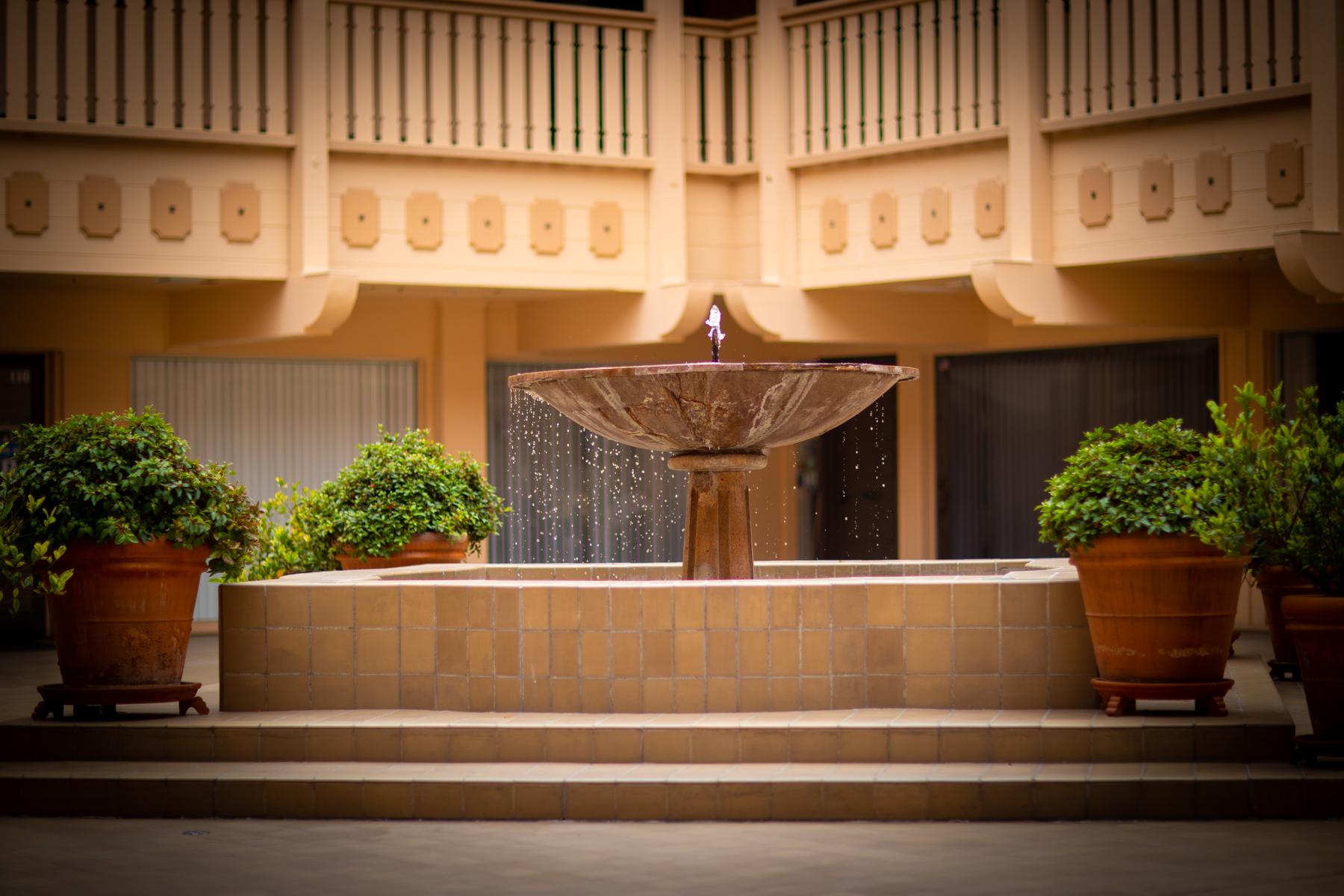
In June of 2020, with the world shut down and her La Jolla office of thirty years suddenly sold out from under her, Dr. Trish Stanley did what a lot of San Diegans did that strange summer: she went for a drive. Her longtime office condo had been listed for sale, the building she'd practiced out of for three decades about to belong to someone else. So on the way home, a little flabbergasted and not quite ready to face boxing everything into a storage unit, she pulled into a building she'd always admired on Ivanhoe Avenue, two doors off Prospect in the heart of La Jolla village.
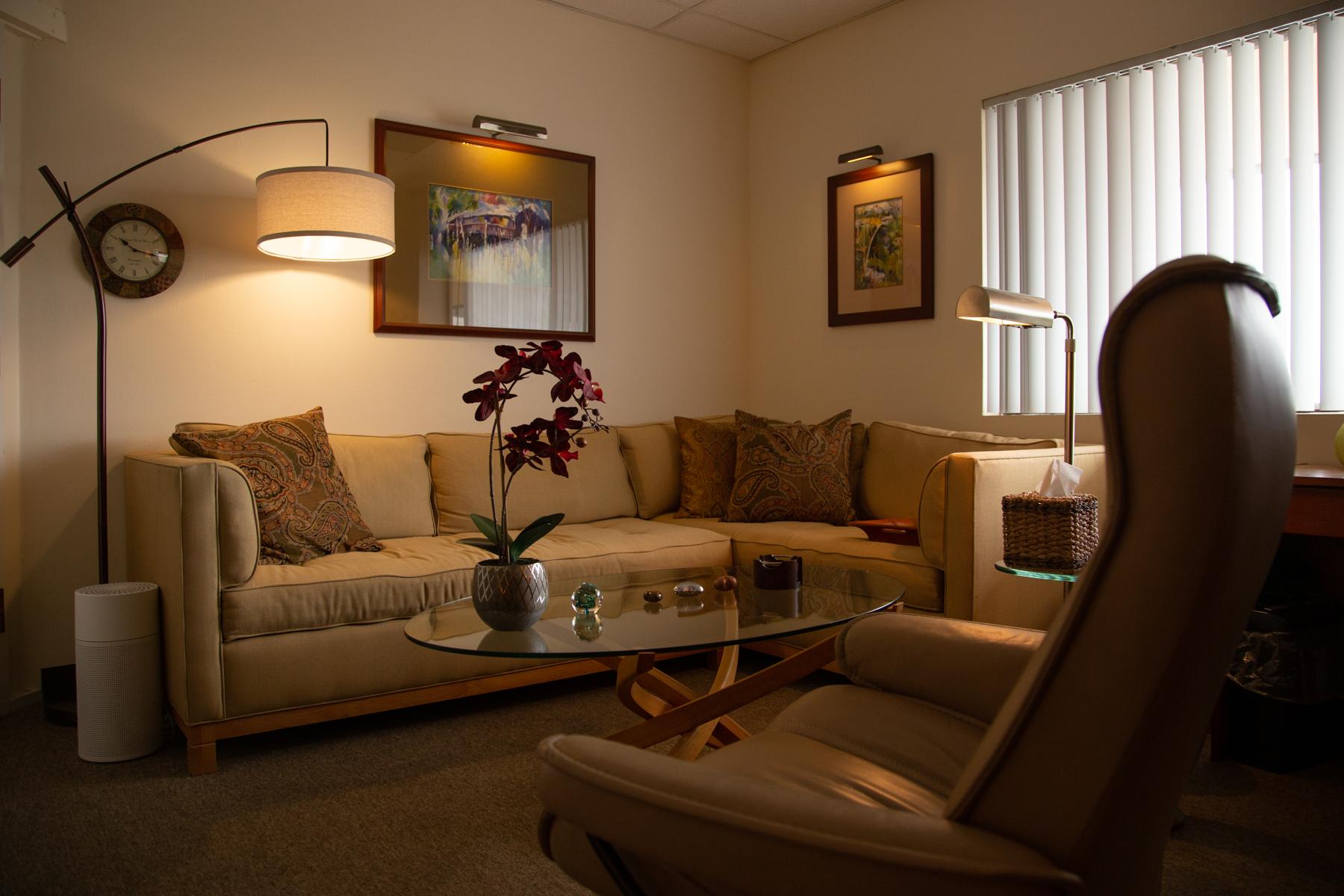
The third floor was full of empty offices - vacant rooms in a city that had pressed pause. She walked the hallway, looked through an open door, and saw straight through to the ocean.
"It just looked like - this is it," she says.
That space, Suite 304 - one big office, one big waiting room, full ocean view - became the new home base for the Center for Couples Therapy. Five years later, it anchors a practice of roughly a dozen clinicians serving couples and individuals across the county, from San Marcos to Chula Vista, both in person and virtually throughout California. But to understand why Dr. Stanley built the practice the way she did, you have to go back a lot further than the building.
A practice built on people, not a shingle
Trish Dr. Stanley, PsyD, LMFT, has been a marriage and family psychotherapist for more than thirty years. She is the founder and clinical director of the Center for Couples Therapy, and from the very beginning she resisted the most common shape a therapy career takes: the solo practitioner, alone with a nameplate on the door.
"Therapy can be a lonely business for a sole practitioner with a shingle outside," she says. From the start, she wanted to surround herself with capable, competent colleagues - and, just as importantly, she wanted to mentor newer therapists coming up behind her. She loves the work of couples therapy itself, but she also loves building the people who do it.
There was a strategic instinct underneath the personal one. By assembling a team that shared a common foundation but each brought additional, specialized training, Dr. Stanley could make sure there was a genuine fit for almost anyone who walked through the door. One couple might want weekly sessions. Another might be ready to dive into a transformative weekend. Someone might come in alone, wanting to work on a relationship their partner isn't ready to address yet. Two of her clinicians focus primarily on individual work - one with a special interest in supporting women struggling in their relationships, another who often sees the male partner and specializes in healing trauma.
"I wanted a place where there would be somebody who'd be a good fit for almost anybody in a relationship struggle," she says - "whether they wanted to see somebody individually, do an educational workshop, do weekly couples therapy, or dive in and do an intensive over a weekend to totally transform their relationship." La Jolla is the central hub, but her therapists meet clients across the region and online, flexibility that became a feature rather than a compromise.
The result is a group that has grown into what the practice now calls Southern California's leading destination for expert couples therapy - and one of the few in the region built deliberately at this scale, with this much range of training under a single roof.
The work is practical - and that's the whole point
Most people picture therapy as an hour on the couch, venting. Dr. Stanley's clients tend to describe something else entirely. Read through the practice's reviews and the same word keeps surfacing: tools. Practical, usable, research-backed skills people can take home and actually try.
That's by design, and it's grounded in real science. Dr. Stanley is a Certified Gottman Therapist, one of three on her team, and the entire practice is trained in the Gottman Method - the structured, goal-oriented approach built on Dr. John Gottman's five decades of research into what actually makes relationships succeed or fail. The practice draws on other evidence-based models too: the Developmental Model pioneered by Ellyn Bader and Pete Pearson, and Emotionally Focused Couples Therapy. The throughline across all of them is that good couples work should teach - it should hand people a toolkit, not just a sympathetic ear.
"People want something they feel is going to generate the results they want," Dr. Stanley says. So rather than excavate years of history, her team works largely in the present tense: What's keeping this pattern in play? What keeps supporting it, going on the way it goes on? And - the harder question - if it were possible, what would you like to do differently, and what gets in the way of doing it?
A favorite Dr. Stanley experiment is almost comically small. What if you got up fifteen minutes earlier, sat outside with a cup of coffee, and talked with your partner about whatever came to mind - a dream from the night before, a worry about the day, something you're looking forward to? Try it for five workdays. See what shifts. "We help people set up experiments," she says. The center even builds custom workbooks for couples in its intensive retreats, complete with skills, coaching, and a roadmap they can keep using long after the weekend ends.
Then there's the metaphor her clients can't seem to forget. One reviewer recalled Dr. Stanley's advice to "swing a lighter bat" - her shorthand for not meeting every disagreement with maximum force - and noted that years later it still made them laugh because it was so true and so useful. That's the Dr. Stanley signature: warm, active, a little playful, and relentlessly focused on giving people something they can do.
"Stuck" - and the art of getting unstuck
One word comes up again and again when Dr. Stanley talks about relationships: stuck. Couples come together because they're different, she explains, and they struggle for the very same reason. Left unaddressed, that friction "calcifies and becomes much more hardened and stuck."
She has a gift for naming the shapes that stuckness takes. Some couples get caught in a cycle of arguing and fighting. Others quietly decide the friction is too stressful and build separate lives - hit the gym in the morning, go to work, grab takeout, come home exhausted, turn on the TV, and pass out, two people sharing an address and not much else. "People have such different ways of coping," she says, "but at the heart of it, we all want a certain kind of comfort and closeness and connection - and get stuck figuring out how to have it."
The hard part, she's quick to point out, is that it's almost always easier to see what the other person should change. So a lot of the work is gently turning that lens around. Why is self-reflection so difficult? Dr. Stanley has a theory: we're more or less hardwired to assume that what makes sense to us is simply normal. Grow up in a household where everyone screams, never has people over, and treats chaos as ordinary, and you'll carry that template forward without ever questioning it. Two people each convinced their own way is the obviously correct one - one craving big parties and constant company, the other longing for quiet and small groups - can spend years deadlocked, each waiting for the other to "just loosen up."
Dr. Stanley's move is to refuse the deadlock and get curious about the specifics. What is it about this situation that traps you? What would it actually take to feel more comfortable here? Sometimes the unlock is tiny: don't leave me standing there alone at the party - take me with you, introduce me to people. "We help people figure out what gets them so stuck," she says, "and what are some ways they could get unstuck." It's creative work, in the moment, built entirely on what the couple in front of her is actually saying. That's the part she loves most.
A full range of help - including a signature weekend
Walk through everything the Center for Couples Therapy offers and the breadth is striking: weekly and occasional couples therapy, individual therapy, trauma-focused therapy, a relationship and marriage preparation course, collaborative divorce coaching, a dedicated coaching practice, the Art & Science of Love weekend workshop, and the offering that has become the practice's signature - its Couples Intensive Therapy Retreats. What makes that last one especially rare isn't just that the Center offers it, but the depth behind it: seven of the practice's therapists are trained to lead the weekend intensives. This is not a one-counselor shop where everything funnels through a single founder - it's a deep bench of experienced clinicians, which means real availability for a format that takes up an entire weekend, a range of styles to match a couple's needs, and a caliber of intensive work most practices simply can't staff.
That range didn't come from a business plan so much as from genuine curiosity. Therapists in California log 36 hours of continuing education every two years, and Dr. Stanley treats that requirement as an open invitation. When a promising new approach surfaces, two or three of her therapists will go train in it and bring it home. "We've just pulled pieces in as they show up and seem really valuable to our clients," she says. "It's a field where new stuff is coming out all the time - new understandings, new approaches - and we want to take advantage of all of it."
The intensive retreats are where that philosophy reaches full expression. The format is built for couples who can't - or shouldn't - wait out a problem in fifty-minute weekly increments: people in the wake of a freshly revealed betrayal, a long-simmering loss of connection, an empty nest that's suddenly gone quiet, or the raw, unspoken question of whether to stay or leave. Many are C-suite executives, entrepreneurs, physicians, and attorneys - high-capacity people who are used to solving things and have run out of road on this one. The retreat begins with a two-hour intake and goal-setting consultation, then moves into a concentrated weekend, typically a Friday afternoon, a six-hour Saturday, and a Sunday morning, with every couple receiving an individualized workbook of tools built specifically for them.
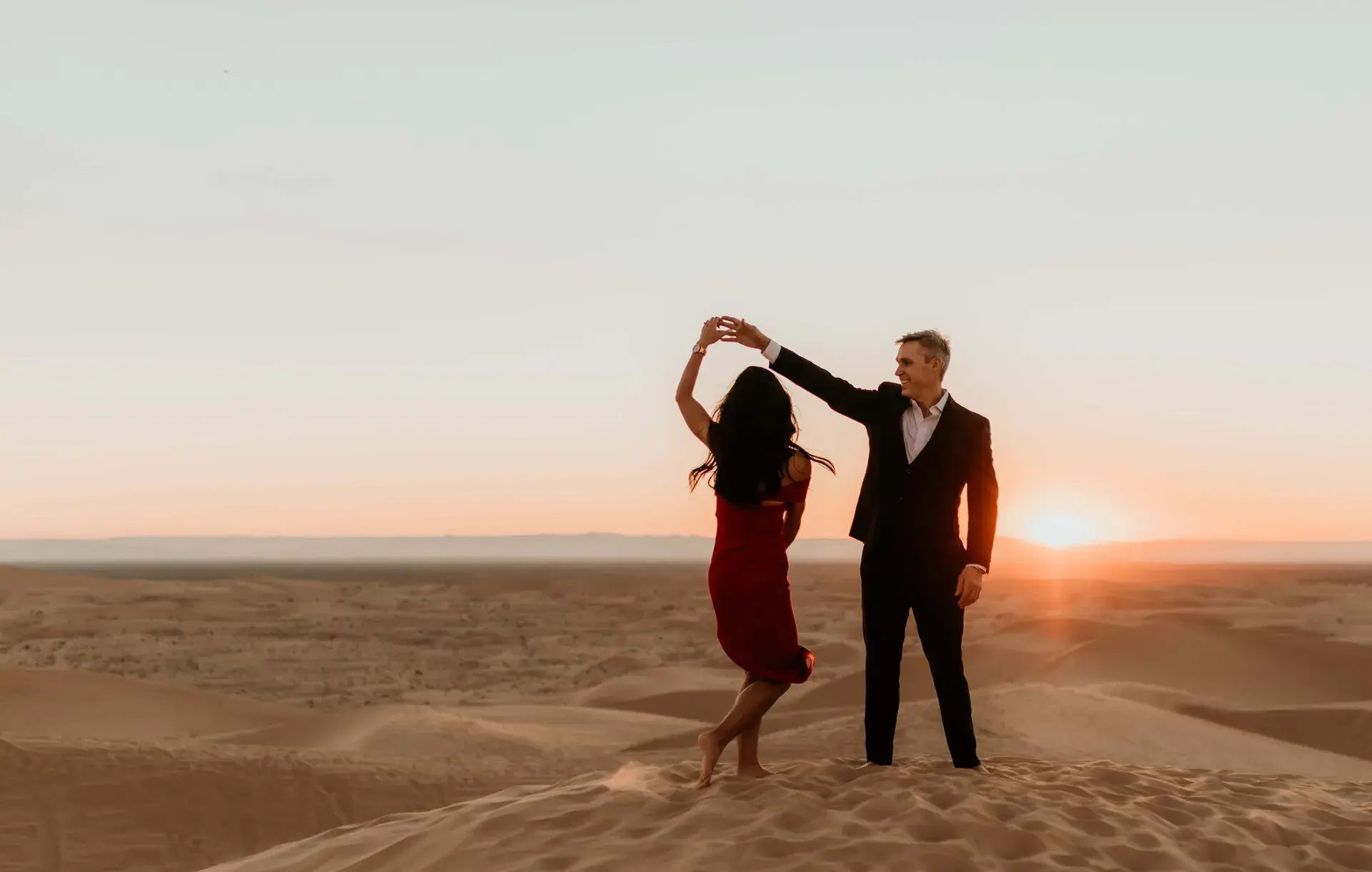
"It's usually a Friday afternoon, a Saturday, and a Sunday morning," Dr. Stanley explains. "We build workbooks for people with tools and skills, we teach them, we coach them - so they can do stuff on their own - and we help them develop a roadmap for how they're going to find their way back to each other." Across her team of seven intensive-trained clinicians, the practice has now run roughly a hundred of these intensives over the last several years. They are not for everyone; the commitment is real. But for a couple at a genuine crossroads, Dr. Stanley says, a single structured weekend can be the start of building "something on the ashes of what's happened."
Lighter on its feet but no less intentional is the Art & Science of Love workshop, a private, retreat-style gathering Dr. Stanley caps at six or seven couples and holds in the WindanSea Beach area of La Jolla. Couples receive a toolbox - a workbook for each partner, playful card decks, and more - and move between comfortable indoor lectures and quiet outdoor patios and gardens (one with an ocean view) to do exercises privately, just the two of them, with Dr. Stanley and a colleague circulating to coach. She has now led around fifty of these weekends, and the thing she loves most is watching the shift happen in real time.
\
The rare founder who optimizes for change, not revenue
It's worth pausing on Dr. Stanley's north star, because it's genuinely unusual. Plenty of founders optimize for revenue. Dr. Stanley optimizes for change. When the conversation turned to how the practice has grown, she didn't talk about margins - she talked about value to clients, about which new training might actually help the couples in her care. She even cited the old book title Do What You Love, the Money Will Follow. "It's a great title," she laughs. "If only everybody believed it."
That value-first instinct shows up in how she talks about her own team, too - and here she almost stopped herself, unsure she wanted it printed. "I feel so privileged to work with people that I love," she says. To a person, she insists, her clinicians genuinely like and respect one another; they consult freely, check in constantly, and all show up for the practice's twice-yearly gatherings, a holiday party and an end-of-summer party that buzz with real conversation. For a practice whose entire purpose is helping people build better relationships, it's hard to imagine a more fitting internal culture.
What San Diego brings to the couch
So does serving this particular city change the work? Dr. Stanley thinks it might. There's a mythology about San Diego - a slower, gentler pace, an easier place to live - and people move here chasing exactly that. They arrive with a California dream and a wish for more ease. The catch, she says with a smile, is that "they bring themselves with them. And they bring their relationship with them."
What San Diego does seem to offer, she believes, is a certain expectation about quality of life - and a population thoughtful enough to act on it. When something in a relationship isn't going well, people here seem a little quicker to think: Wait a second. What can we do about this? It's a mindset that fits her work perfectly, because that question is exactly where good couples therapy begins.
That instinct runs straight into one of Dr. Stanley's deepest convictions, which is about stigma. She points to research suggesting that when a woman first finds a lump in her breast, it's roughly six weeks before she seeks help. When a couple hits a serious relationship challenge? More like six years. She'd love to close that gap. We hire trainers for our health and book appointments with acupuncturists and cosmetic dentists without a second thought, she points out - and couples therapy is entirely private and confidential besides. "Why would I stop myself," she asks, "from seeing what could really happen to improve the day-by-day quality of my life and my relationships?"
\
The five-year vision: more of this, not more of everything
Ask most founders where they'll be in five years and you'll hear bigger. Dr. Stanley's answer is the opposite. "My dream is to really nurture and sustain what we have," she says. "Bigger isn't necessarily better." The center is at a size she loves - large enough to offer real range, small enough that the culture stays intact and every clinician still feels like family.
It's a rare thing to hear a business owner describe their team and their ambition this way, with so little appetite for empire and so much for depth. But it's of a piece with everything else about the Center for Couples Therapy: a practice that measures itself not by how much it can scale, but by how much it can actually change. For the couples who find their way to that ocean-view office two doors off Prospect - or to a quiet weekend by WindanSea Beach - that may be exactly the point.
The Center for Couples Therapy is based at 7946 Ivanhoe Avenue, Suite 304, in La Jolla, and serves couples across San Diego County in person and throughout California virtually. Learn more or book a complimentary consultation at thecenterforcouplestherapy.com.
Built in San Diego is a free feature series by Revvia that tells the stories of the real people behind San Diego's local businesses - the founders, the operators, and the builders who make this community worth living in. Every feature includes a professionally written article, a live backlink, and an owner's story told the way it deserves to be told.
\


