
Walk past almost any apartment complex in Southern California and you'll find the same rule in the lease: no smoking, no vaping. Push the habit out of the bars, out of the restaurants, out of the shared spaces, and it doesn't disappear. It just goes home.
That's the problem Christos Nicolaidis can't stop thinking about.
"We are tackling a hidden health crisis," he says, "and that is the growing crisis of secondhand smoke and vapor."
From an office on Second Street in downtown Encinitas, Nicolaidis runs Philter, the company he co-founded to stop secondhand smoke and vapor at the one point where it can actually be caught: the moment someone exhales.
Why HVAC and air purifiers lose the race
Nicolaidis lays out the logic the way an engineer would. Regulators did a good job of keeping consumption out of public places where smokers and non-smokers mix. But the behavior didn't stop. It shifted from public spaces into private, confined ones - homes, condos, apartments with shared walls.
And once smoke or vapor is in a room, the usual fixes are already behind.
"HVAC systems don't work. Air purification systems don't work, because by the time they capture any particulate matter, it's too late," he says. "It's already been exhaled into the ambient air." Those particles travel far enough and linger long enough to reach the people who never chose to be exposed - children, the elderly, friends and family, pets.
"The best way to solve it is at the source," he says. "It's capturing the exhale right at the exhale point."
The smallest air filter
So Philter built what Nicolaidis describes as the smallest and most powerful filter ever built, doing all of its work in a space of less than three inches. A proprietary airflow and filtration architecture lets it absorb a heavy load of smoke and harmful particulates in that tiny space without clogging the way most filters do.
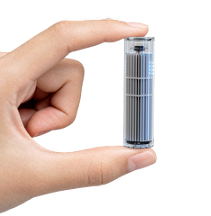
Today the company holds nine granted utility patents covering its filtration, its airflow dynamics, and the ability to attach a filter to a vaping device.
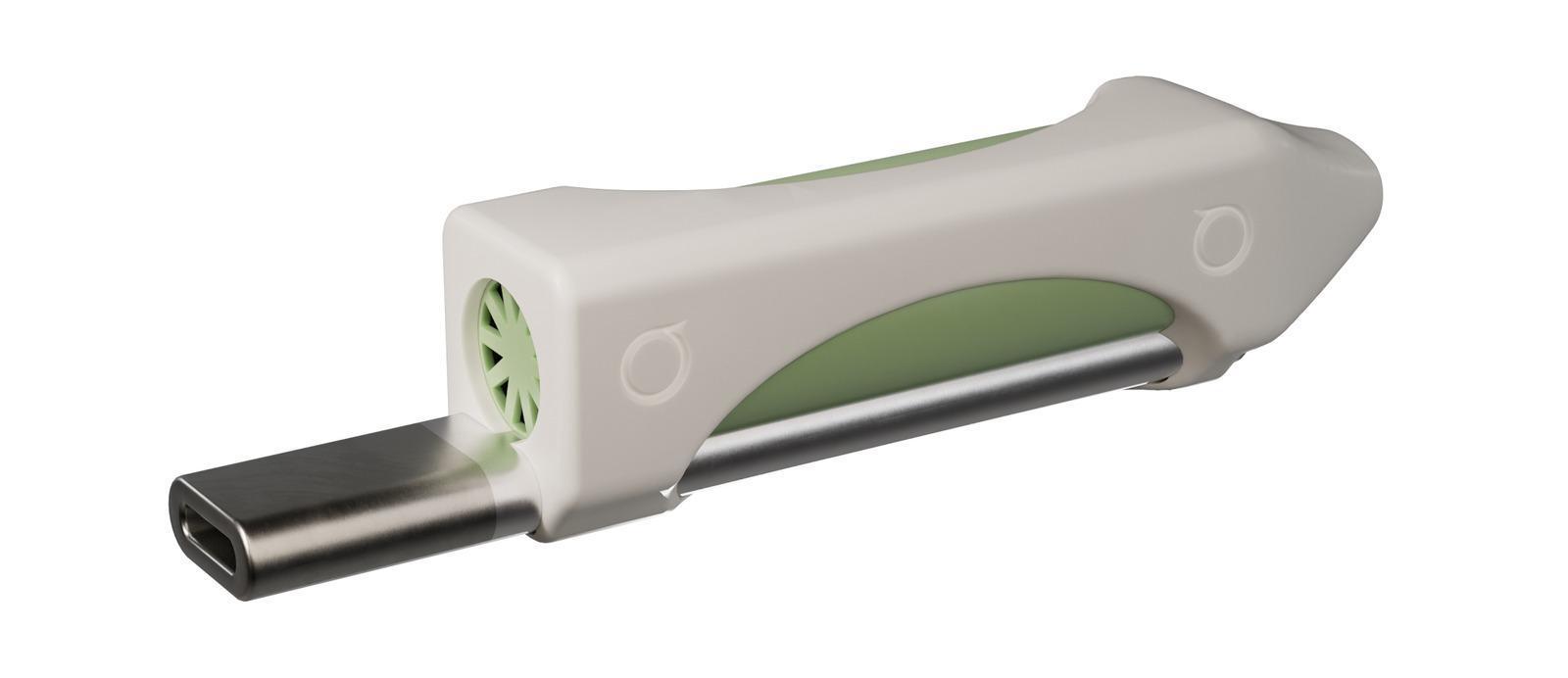
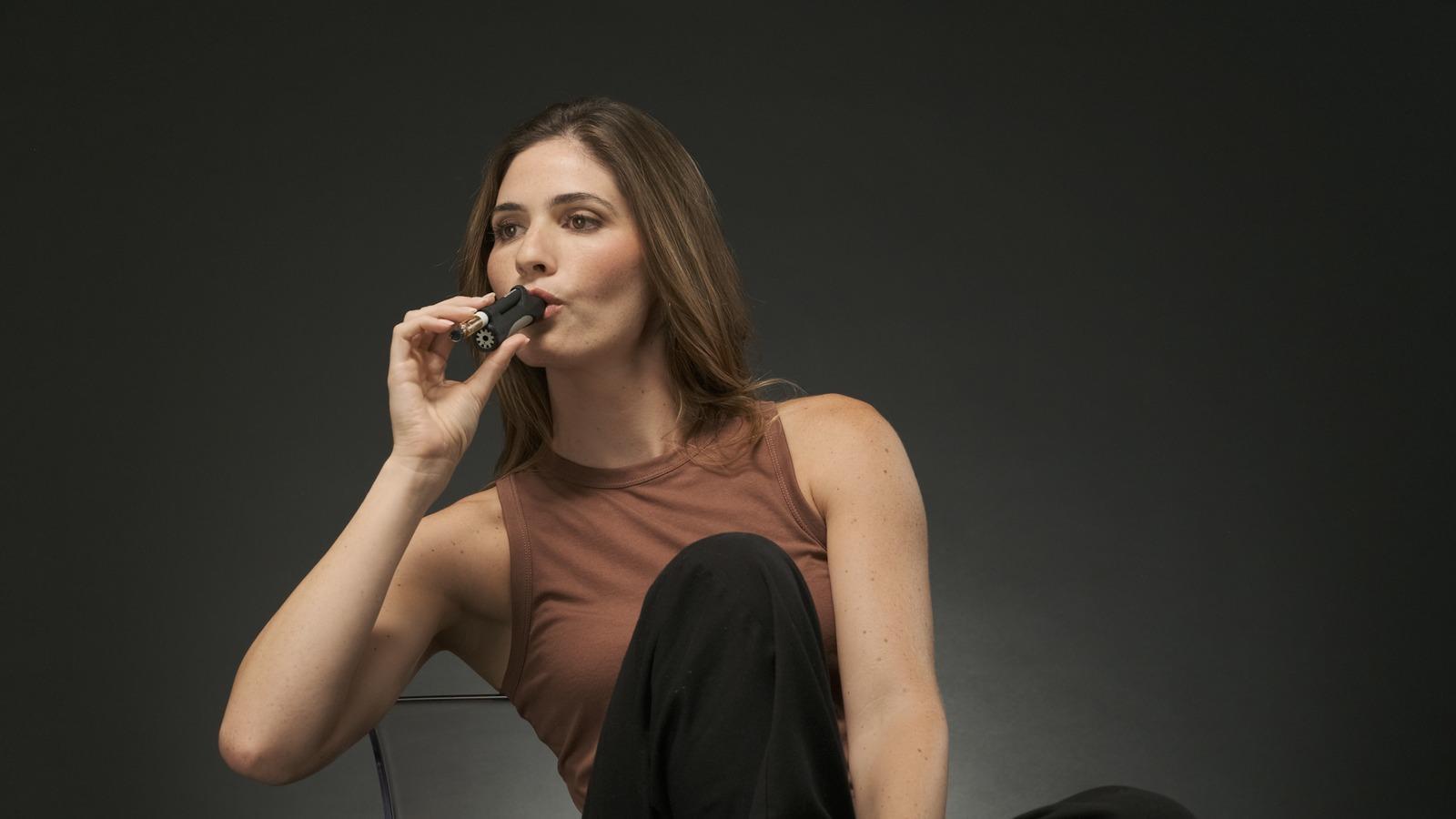
The product itself is simple in the hand. A silicone sleeve holds a standard vape pen on one side and a Philter filter on the other. Take a draw from one end, flip it, exhale into the filter. "Now what we've created is virtually an all-in-one device," Nicolaidis says. "The most important thing is they're protecting their family, they're protecting their pets, and they're protecting their loved ones."
More than 190,000 filters sold and one surprising answer
Philter's first generation of filters sold about 190,000 units over a few years. But Nicolaidis is clear that growth wasn't the point of that first run. The point was learning.
"We intentionally wanted to sell them not for the purpose of growing the business," he says, "but to really collect market intel on consumer behavior."
The company surveyed 35,000 customers, and over 20% of them responded. The findings became a 15-page white paper - and they upended the team's biggest assumption. Philter had expected most buyers to be after discretion. Instead, 63 percent said they were using the filters to protect their family, friends, pets, and in the home.
"What that told us is that there's a growing contingency of people who are more concerned about how they are affecting others than they are about being discreet," he says. In fact, 89% said they felt much better about their consumption when the secondhand smoke was eliminated.
The rest of the data filled in the picture. Two thirds of customers primarily consume at home. The core buyer is 25 to 35 years old, and 55% rent rather than own their home - living in apartments and condos with shared walls and leases that forbid consuming in their own homes. Nicolaidis points to local ordinances, including one in Carlsbad, that restrict smoking in shared-wall housing and put landlords in charge of enforcement. That's a hard rule to police. A filter makes it a lot easier to live with.
Built from the feedback
Customers told Philter two more things: they wanted filters that lasted longer, and they wanted the technology built right into the vaping device itself. Then the team asked a harder question: could they make it small enough to be integrated into a vaping device? It took several years to figure out.
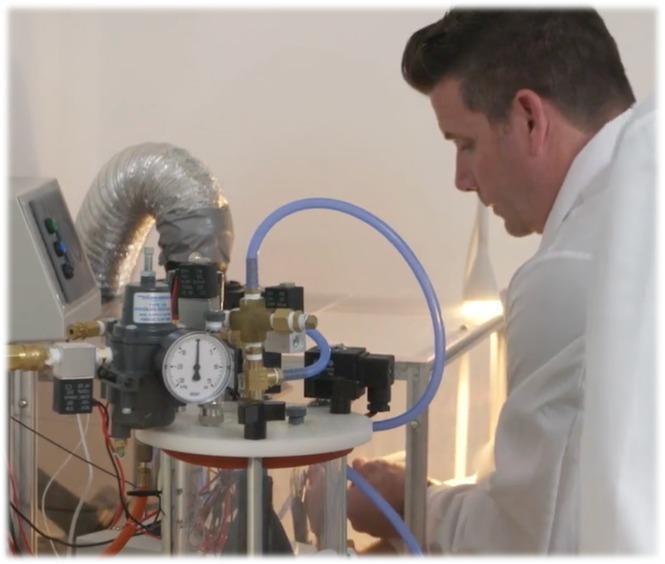
So for the last two years the company has been in R&D, with engineers working in a lab in East County. The result is a second generation of handheld filters - higher capacity, longer lasting, only slightly larger - launching direct to consumer at shopphilter.com.
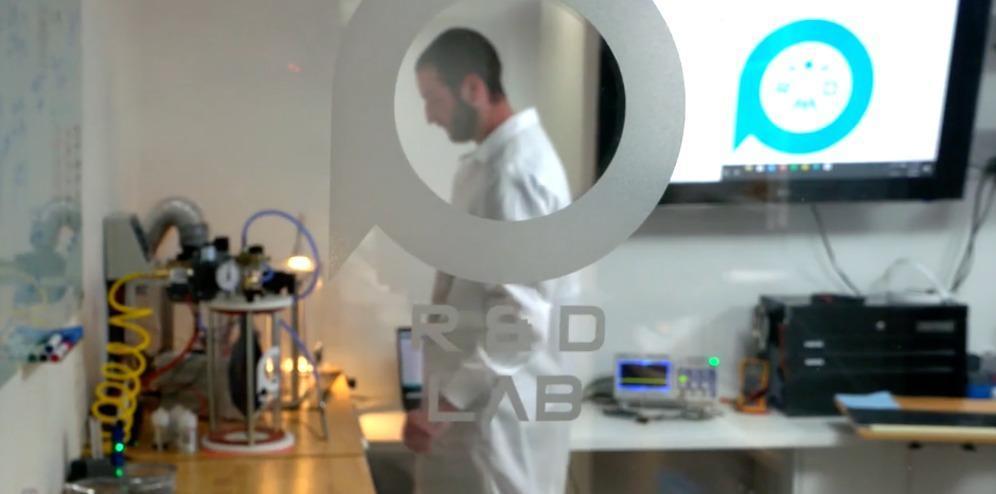
The integrated version is in the lab too. "We have technology that's in our lab working," Nicolaidis says, "and it will be eventually integrated into a vaping device."
An engineer, an idea, and ten years of work
The company began with a partnership. Nicolaidis met his co-founder, John Grimm, while Grimm was with a boutique engineering firm - a small team of design engineers who take on the non-standard work most firms can't. Grimm had served in the Navy and was on the path to becoming a Navy SEAL before an injury redirected him into engineering work for the government.
About ten years ago, "a light bulb went off," Nicolaidis says. Secondhand smoke was going to get worse, not better. Maybe there was a way to help the people consuming to eliminate it themselves. Today, he calls Grimm "the renowned expert in air filtration and airflow management."
A serial entrepreneur's playbook
Philter isn't Nicolaidis' first time building something new. Years ago he partnered with the former chief technology officer of Gateway Computers on a company called GiftFlix, which created the first DVD movie gift card - a card on the retail rack that previewed a film and let the recipient buy it online, before Netflix arrived on the scene. That work led to the American Idol gift card program, which his team licensed for several years before the rights went back to FremantleMedia and on to Apple.
The Idol program surfaced its own problem: the fans who wanted the merchandise were young and didn't have debit or credit cards. So Nicolaidis and his team built BillMyParents, an online payment system with alerts built in.
Ask him what carried over from all of it and he doesn't talk about products. He talks about people.
"What I learned is building the right team with the right mix of critical disciplines that would be bound for success," he says. "You have to identify people that have the ability to be truly committed to a mission." He points to Philter's CFO, whom he describes as an extraordinary operator with a strategic mindset from more than three decades as an institutional investor, as the kind of person a company like this needs from day one.
His own gift, he says, is seeing what's coming. "I'm really good at identifying trends and identifying ways that we can disrupt markets, but more importantly, coming up with solutions that are going to solve a ubiquitous problem."
What's next
Philter is raising another round of capital and launching new products as Nicolaidis sets his sights on a fundamental shift in the vaping and smoking paradigm.
The company is developing a next generation technology that will be ready for consumers in the next year or two - it's far more consumer friendly - it's much smaller and lasts longer.
"There's nothing like it anywhere that we know of," he says. These new innovations in clean air technology can be integrated into vaping devices and have potential applications to eliminate harmful air in other settings including medical, surgical, industrial, and home applications. Nicolaidis says, "It's all about improving human health and eliminating harmful air that is commonly inhaled."
The mission behind Philter Technologies hasn't changed since the light bulb moment. Clean harmful air at the source, and give people a way to consume more safely without putting anyone else at risk.
Philter is an Encinitas-based company developing patented source-capture filtration for secondhand smoke and vapor. Learn more at philtertech.com and shop at shopphilter.com.
Built in San Diego is a free feature series by Revvia that tells the stories of the real people behind San Diego's local businesses - the founders, the operators, and the builders who make this community worth living in. Every feature includes a professionally written article, a live backlink, and an owner's story told the way it deserves to be told.
Photography credit: Lexi Brienne (Lex Behind the Lenz).


