
After twenty-three years running global enterprises - including a business north of $900 million at Western Digital and, later, a roughly $450 million operation - Joe Phillips could have retired into the quiet satisfaction of a long, successful career. Instead, he had a realization that reshaped the rest of his working life: his greatest impact had never really been the strategy on the wall. It was the alignment of the people in the room.
"I always knew I enjoyed leading people, coaching people, helping them be more than they thought they could be," Phillips says. So in May of 2005, he walked away from the boardroom and started The Best CEO Group, a San Diego peer-advisory practice for founders and business owners. Twenty-two years later, he's still at it - and still doing the work he was, by his own account, built for.
This is a story about a man who spent a career being, in his words, "a pretty tough guy," and then spent the next two decades arguing that the thing most likely to break a company isn't bad logic. It's people.
A private board of directors, once a month
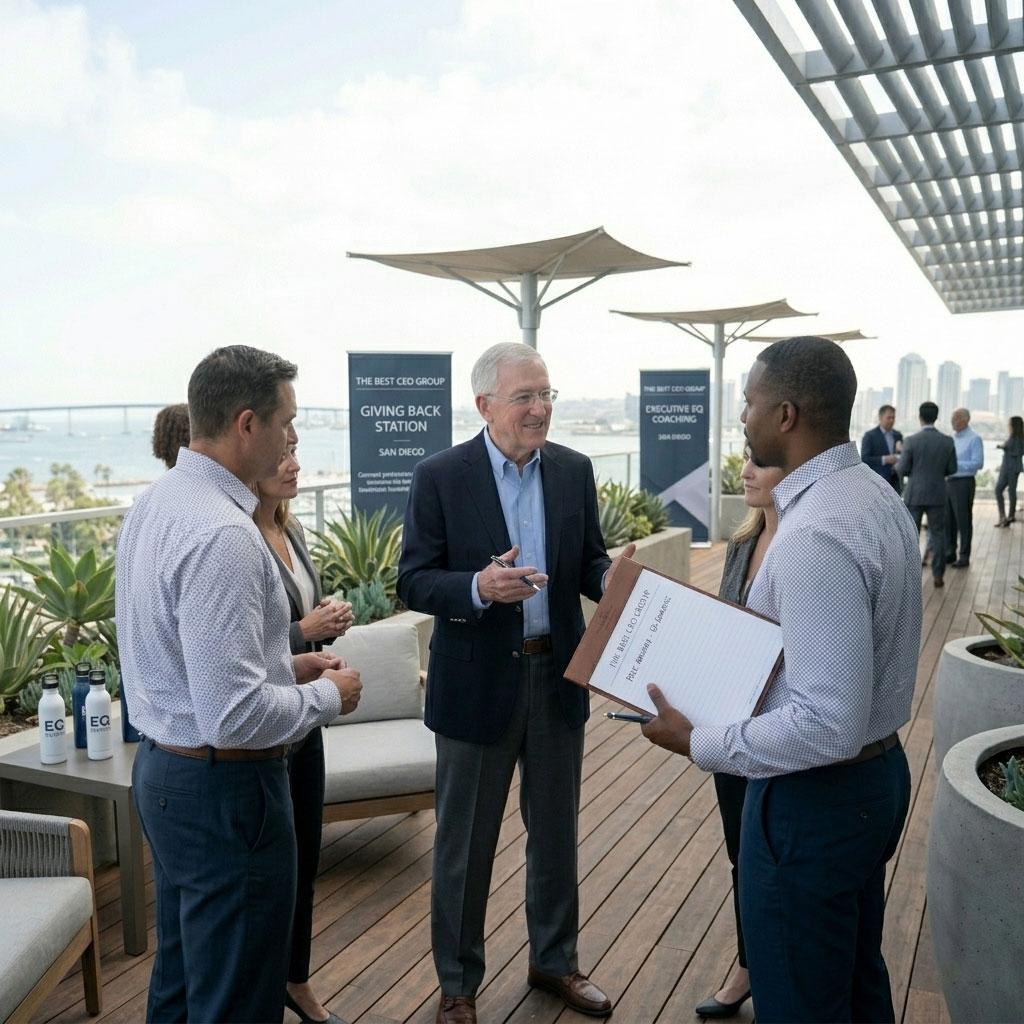
Phillips' elevator pitch is simple. "I work with a very select group of CEOs and business owners in San Diego," he says, "and help them make their vision a reality." The mechanics are deliberately intense. He runs two CEO peer groups, each capped at roughly ten to twelve members, and brings each one together once a month for a five-and-a-half-hour working session. There, members lay their hardest, most gut-wrenching problems on the table - and instead of facing them alone, they get the collective intelligence of ten fellow CEOs and a facilitator who has actually sat in their chair. Everyone asks questions. Everyone offers suggestions. Everyone leaves with a path forward.
Between those monthly sessions, Phillips meets members one-on-one for two-hour deep dives. (The day of this interview, he had one scheduled the moment we hung up at 10 a.m.) His members run companies in the $5 million to $100 million-plus range, most of them majority owners of the businesses they lead - which is precisely the point. These are people who carry the final weight of every decision and have nowhere safe to put it down. Phillips' group is where they can.
He's also built a broader ecosystem around the flagship offering: an Exec Key Group, a developmental cohort for leaders of smaller companies and the key executives inside his members' organizations, plus direct one-on-one coaching for leaders navigating major transitions. The through-line is the same everywhere - a confidential brain trust functioning as a private board of directors, not a networking club.
The conviction: companies break on human friction
If there's a single idea at the center of Phillips' work, it's this: strategic plans usually fail not because the strategy was wrong, but because of poor leadership dynamics - what he calls "human friction." And the antidote, he's become convinced, is emotional intelligence.
"What's the biggest challenge facing CEOs today?" he asked a room during a recent talk on EQ as a leadership advantage. The answer that came back first was the right one: people. "It is people," Phillips says. "You lose people if you don't have a healthy emotional intelligence. If you have a healthy emotional intelligence, the culture in your company is better. People enjoy it, they show up better, they perform better."
He's aware this can sound soft to a certain kind of executive - the one who insists the only way to get things done is to be a little ruthless and keep emotion out of it. Phillips has a practiced, almost surgical response to that pushback, and it's pure EQ in action. He doesn't argue. He gets curious. "I'd say, help me understand - what facts are you using to make that statement?" He believes in asking insightful questions, professionally and politely, rather than telling someone their philosophy is nonsense. The question does the work the insult never could.
From "tough guy" to Master Practitioner
What makes Phillips credible on this subject is that he wasn't always a believer. For most of his operating career, he was, by his own cheerful admission, a hard-driving boss. He was straightforward with the people who worked for him - they always knew where they stood - and he invested heavily in developing them. (He even wrote his master's paper on assessment centers and performance reviews.) But the emotional intelligence came later. "I've mellowed slightly over the years," he says, "and I've got a stronger emotional intelligence for sure than I had earlier."
That growth wasn't accidental. About a decade ago, Phillips took a coaching course that opened his eyes to how much better he could be. Roughly six years ago, he went further, earning his credentials as a practitioner of an emotional-intelligence assessment instrument - then advanced to certified practitioner, then team-certified, and finally, two years after that, to Master Practitioner, the elite tier of the discipline. Today, EQ isn't a module he bolts onto a session; it's woven into how he coaches. In one-on-ones, members work directly on their own emotional intelligence, and the results compound. Some who took the assessment five years ago have retaken it recently and found they've genuinely changed - their profiles, their relationships, their lives. One member recently filmed a testimonial about exactly that.
That commitment to ongoing growth is itself the lesson. "I've continued to grow," Phillips says, naming it as the single most important thing he's done across twenty-two years. The coach who stops growing, in his view, has no business coaching.
The 90-minute test: people first, or not at all
Phillips guards the culture of his groups with a screening process that doubles as a statement of values. Every prospective member sits for a 90-minute interview - but if, somewhere in the first stretch of that conversation, Phillips senses that a CEO is all about results and indifferent to people, the meeting tends to end early. "Usually we're done at twenty minutes," he says. "If it's all about the numbers and people don't mean much, we're not going down the aisle together."
It's not snobbery; it's chemistry. A member with a fundamentally different philosophy about how to treat people would sit at odds with the rest of the group - and with Phillips himself - and poison the very dynamic that makes the group valuable. He applies the same standard to commitment. Over the years he's parted ways with five or six members who weren't showing up, weren't doing what they said they'd do, or simply weren't a fit. "This is my company," he says plainly. "I make that call. I'm the founder, I'm the chairman, I'm in all the meetings." That exclusivity, paradoxically, is what makes a seat worth having.
"You're Crazy" - and the case for impossible goals
The title of Phillips' Amazon #1 bestseller tells you most of what you need to know about his philosophy on ambition: You're Crazy! How the Hell Are We Going to Do That?! It comes from a reaction he's heard again and again across his career - the disbelief on a team's faces when a leader puts a genuinely audacious goal in front of them.
Phillips wants that reaction. He's a devoted believer in big, hairy, audacious goals, and he's allergic to the conventional wisdom that goals should be "realistic." A goal you have a 95% or 100% chance of hitting, he argues, isn't really a goal - it's a forecast. He'd rather see a target with about an 85% chance of success, the kind that forces a hard question: We can't get there doing what we've always done - so what do we do differently? "That's exactly what I want your people to say when you put the vision in front of them," he explains. "'You're crazy, how are we going to do that?' Well - let's talk about it. Let's figure it out."
He's watched that mindset produce staggering outcomes. He tells the story of one leader, a charter member of one of his groups, who took over a roughly $6 million business and, over about a decade, grew it to $140 million. The growth, Phillips notes, was never preordained - it came from a stubborn willingness to set goals that demanded real ingenuity, effort, and, yes, a little luck.
The proof is in the members
Phillips has plenty of those stories, and many are hiding in plain sight in his members' own companies - a roster that reads like a who's-who of San Diego business, including Baker Electric, The Super Dentists, TrellisWare Technologies, and more.
The one he returns to with obvious pride is Tom Carter, founder of TrellisWare Technologies. When Phillips first approached him, Carter had fewer than 20 employees and was doing around $4 million in revenue - and told Phillips he simply had too many hats to take time away for a group. So he hired a number-two, and several months later, he was ready. Carter stayed in the group for eleven or twelve years, growing TrellisWare roughly six times over, to around $24 million, before retiring. Here's the kicker: the leadership team Carter put in place is still running the company today, and it has since grown tenfold again - to a roughly $250 million enterprise, with Carter still among its main owners. He filmed a testimonial for Phillips just a few months ago.
Then there are the saves that never make a logo wall. Phillips recalls a member who, by his account, would have gone bankrupt had the group not convinced him to do something he badly didn't want to do. For a man who measures himself by other people's success, those are the stories that stick.
Why he built it alone
Phillips didn't always intend to go independent. He came up through the mastermind tradition - he name-checks Napoleon Hill, who popularized the concept - and eventually trained as a chair with Vistage, the national CEO-group franchise. It didn't go to plan. By his own honest telling, he aimed too high too fast, chasing only enormous companies - the WD-40s and National Universities of the world - for his first group. Those executives kept asking how many other $200 million companies he had in the room, and he didn't yet have the answer. He couldn't launch a group fast enough, and Vistage stopped investing in him.
In hindsight, getting cut loose was the best thing that could have happened. In May 2005 he started The Best CEO Group on his own terms, and he's never looked back. "I own this business. I make all the decisions," he says. "It really has paid off to be independent and call all my shots." That independence is now central to his pitch: he positions The Best CEO Group as a boutique alternative to the national franchises - no chair reading from a standardized manual, no generic curriculum, just real-world problem-solving among a vetted circle of local founders. Last year, he notes, was his biggest ever: the most members, the most revenue, the most profit he's ever had.
Making San Diego a better place to work
For all the talk of revenue multiples, Phillips is unusually clear that money isn't the prize. "The money is how I keep score," he says, "but that's not the ultimate." His actual goal is bigger and more rooted: "to make San Diego a better place to live and work" by helping its small-business owners succeed. After more than 35 years in the local business community, that's not a marketing line - it's a civic identity.
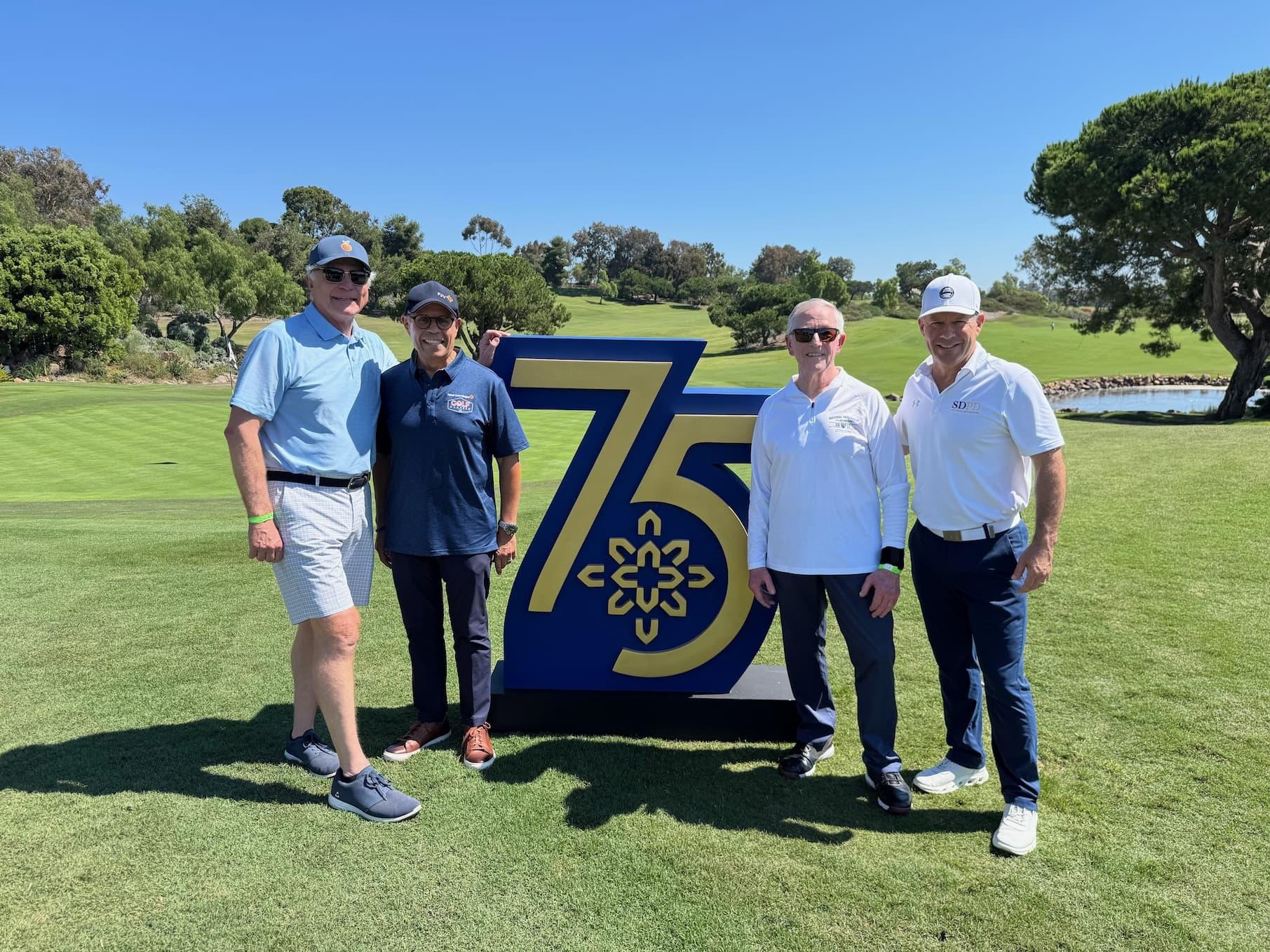
It extends well past the boardroom. Phillips serves as a SCORE counselor, mentoring small-business owners on behalf of the Small Business Administration, and gives his time to Father Joe's Villages as the presenting sponsor of their Golf Classic. Stewardship, he'll tell you, isn't a side project; it's a non-negotiable part of what leadership is supposed to mean.
The vision: not bigger, just better
Ask Phillips where he wants to take the business over the next several years and his answer defies the usual founder reflex. He doesn't want to scale up. He wants to keep his groups full, repeat his best year, and - above all - keep getting better at the craft itself. "I'm not trying to grow any bigger than I was last year," he says. "I just want to be a better coach, and to help people get to their destination quicker."
There's a poignancy to where he is now. His longest-tenured member - a man who's been with him since the very beginning in 2005 - is preparing to sell his company on a $10 million cash offer and will likely move on within the year. "It's like your kids going off to college," Phillips says. After twenty-two years, the hardest part of doing this work well is that you sometimes coach people right out of needing you. For Joe Phillips, that's not a loss. It's the whole point.
The Best CEO Group is a San Diego–based CEO peer-advisory and executive-coaching practice led by founder Joe Phillips, a Master Practitioner in Emotional Intelligence and author of the Amazon #1 bestseller You're Crazy! How the Hell Are We Going to Do That?! Learn more at thebestceogroup.com.
Built in San Diego is a free feature series by Revvia that tells the stories of the real people behind San Diego's local businesses - the founders, the operators, and the builders who make this community worth living in. Every feature includes a professionally written article, a live backlink, and an owner's story told the way it deserves to be told.
\


